
SMA-M to coaxial adapter
Connects a coaxial-fed (outdoor or larger) antenna to the radio. Choose the SMA male variant — the end with the centre pin — to fit the jack.
$1.59$1.60
View on AliExpressHow to fit a bigger or different antenna to the ATS Mini without buying the wrong connector — the SMA-male rule, the RP-SMA trap, and which adapter does what.
Some links on this page are AliExpress affiliate links. If you buy through them we may earn a small commission, at no extra cost to you. It never changes the price you pay, and we only list gear we would actually use with an ATS Mini.
For every adapter here, the end that screws into the ATS Mini must be SMA male — the one with the small centre pin (the radio’s jack is SMA female). Watch out for RP-SMA, which looks identical but has the pin and socket reversed and will not mate.
One rule saves most of the money and frustration here. The ATS Mini’s jack is SMA female, so anything you screw onto it has to end in an SMA male: the connector with the small gold pin in the centre and a knurled nut that turns. Forget the threads. The radio’s own jack is the part with the visible outer threads, so look at the centre contact instead. A pin means male, which is what you want.
Watch for RP-SMA. It looks identical to ordinary SMA, but the pin and socket are swapped, so it will not mate, and cheap marketplace listings sometimes ship it when you asked for "SMA." The tell is the centre contact: a standard SMA male has a pin; an RP-SMA male has a hole. Check the photo before you buy.
Pick the adapter by what is on the other end, your antenna’s connector. A coaxial-fed outdoor antenna wants an SMA-male-to-coax adapter (check which coax connector your feedline actually uses). An old TV or FM aerial with a Belling-Lee or PAL plug needs the SMA-male-to-TV adapter. A ham or CB antenna almost always ends in a PL-259 plug, so the SMA-male-to-SO-239 adapter is your bridge to a real outdoor HF wire. For BNC gear, such as scanners and test leads, a single SMA-male-to-BNC-female piece is cleaner than guessing a gender from a grab-bag.
Connects a coaxial-fed (outdoor or larger) antenna to the radio. Choose the SMA male variant — the end with the centre pin — to fit the jack.
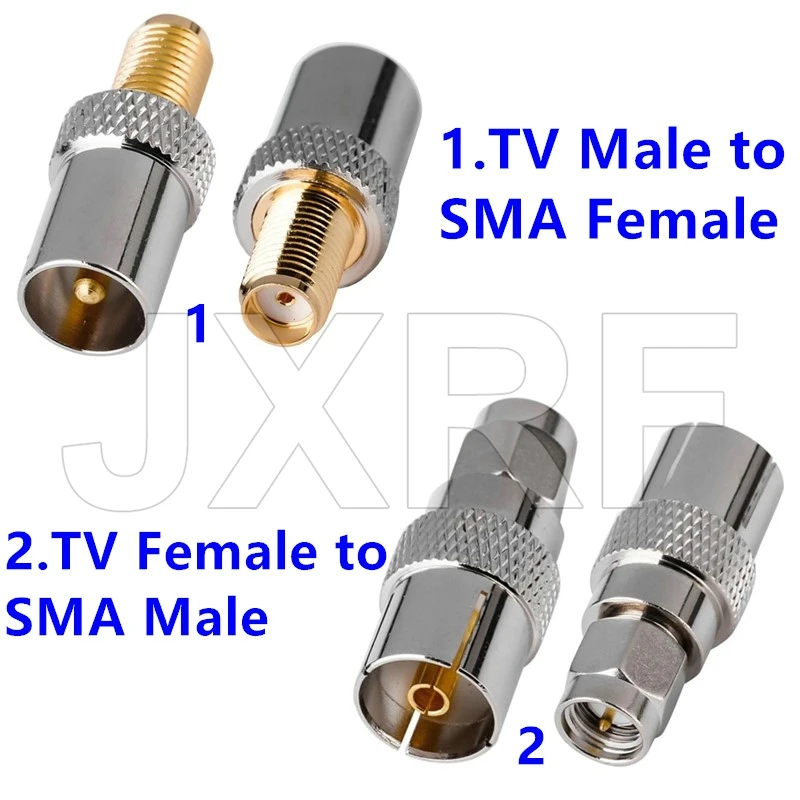
Feeds a TV or FM aerial (Belling-Lee/IEC) into the ATS Mini. SMA male, with the centre pin, toward the radio.
SMA male to SO-239 (UHF female) — the bridge to ham and CB antennas, which almost always end in a PL-259 plug. Screws onto the radio and takes a PL-259 feedline; the standard step up to a real outdoor HF wire.
SMA male to BNC female — a single, unambiguous piece for BNC-terminated antennas and cables (scanners, test leads). 50-ohm, centre pin toward the radio. Cleaner than guessing a gender from a grab-bag.
A right-angle adapter lets the feedline exit sideways instead of straight up, taking strain off the radio’s jack when it is handheld or sitting in a stand. It adds one more joint, so a sliver of signal, but it protects the connector. And if you have already received an RP-SMA antenna or pigtail — common with parts derived from Wi-Fi gear — and it will not screw on, an RP-SMA-to-SMA adapter rescues it. Check the centre contacts in the listing photo, because RP-SMA gender is back to front.
A right-angle SMA male-to-female adapter. Lets the feedline exit sideways instead of straight up, taking strain off the radio’s jack. It adds one joint, so a little loss, but it protects the connector.
For rescuing a wrong-polarity antenna you already own — RP-SMA is common on Wi-Fi-derived parts and will not mate with the radio. Check the photo’s centre contacts, since RP-SMA gender is reversed. Buying the right antenna is cleaner, but this saves a mismatched one.
The grab-bag kits are handy when you are not sure which combination you need, but a kit is also where the gender mistake creeps back in, so find the one piece you actually want, confirm the centre pin, and ignore the rest. One kit is plenty; you do not need three.

For BNC-terminated antennas and cables. Pick the piece with an SMA male end (centre pin) toward the radio — the single SMA-male-to-BNC-female piece above is usually the cleaner choice.
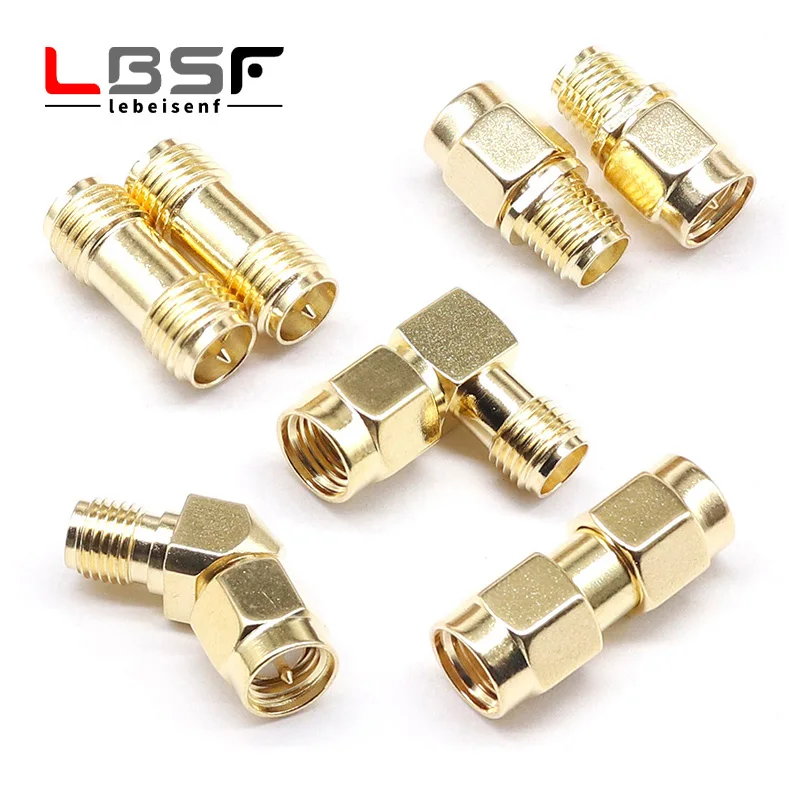
A mixed SMA adapter kit. Use the piece whose radio end is SMA male (centre pin); one kit is usually enough.
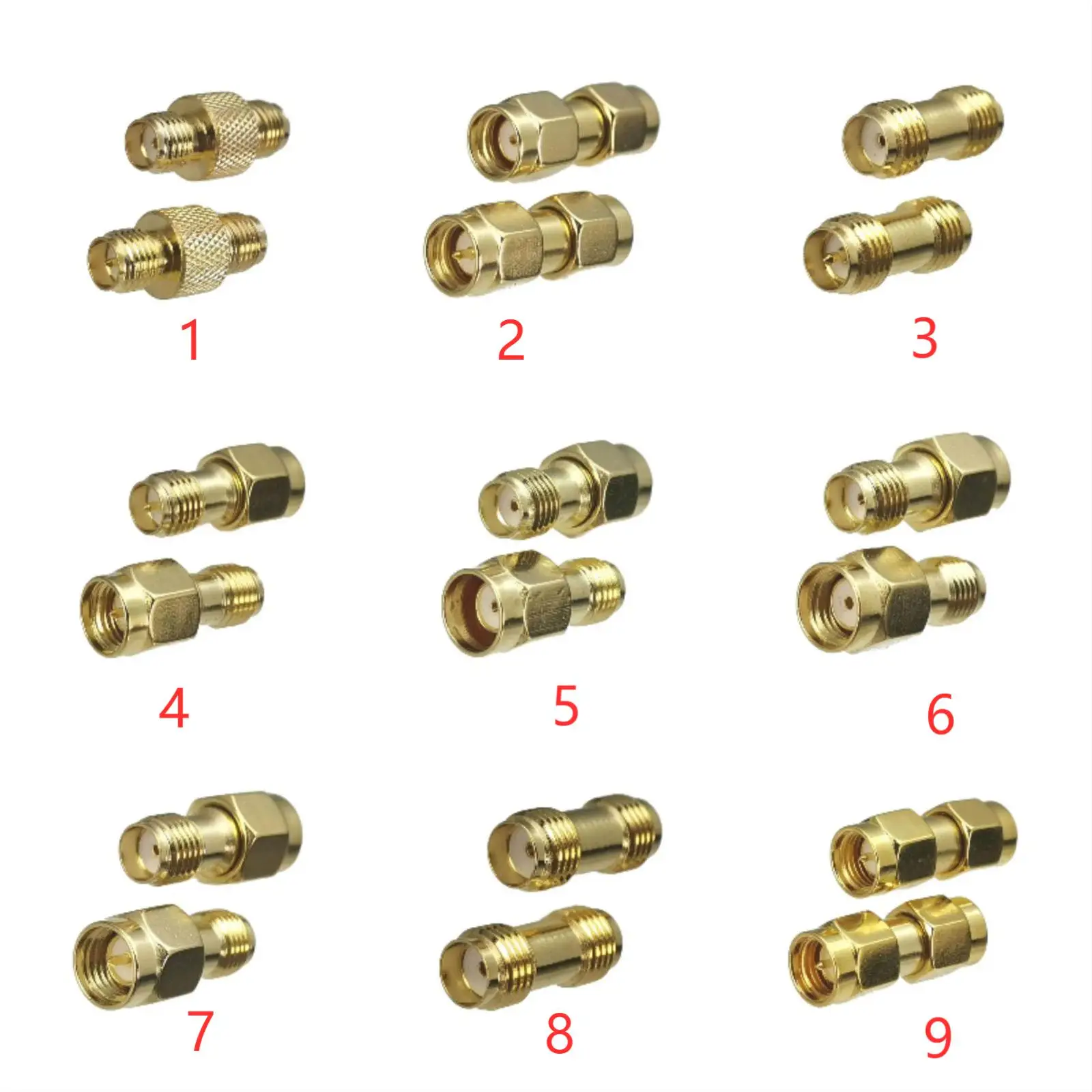
Another mixed SMA adapter listing. Same rule: SMA male, with the centre pin, toward the radio.

A third SMA adapter option. Choose the variant that presents an SMA male end to the radio.
Every adapter in the chain costs a little signal and adds a joint that can work loose, so buy an antenna with a native SMA-male plug when you can and reach for adapters only to bridge gear you already own. One more wrinkle: because the radio’s input is high-impedance rather than 50 ohms, feeding it a real 50-ohm coax antenna can add mismatch and interference. A 50-ohm terminator or a small (around 3 dB) attenuator inline often helps more than it costs.
If you have not chosen an antenna yet, start with the antenna guide.